I study how aerosols, clouds, and radiation interact to shape weather and climate, from tropical convection and cirrus to polar mixed-phase clouds. My approach combines NASA satellite and airborne observations with climate model output, radiative-transfer and cloud-resolving simulations, and machine learning, guided by a recurring question: what does the vertical and size-resolved structure of aerosols and clouds reveal that column-integrated quantities cannot? Current themes include mineral dust, from its evolving global cycle to its role in cloud microphysics — the warm-rain and ice-crystal processes that govern precipitation; the radiative structure of tropical cirrus and polar clouds; the atmospheric and climate impacts of volcanic eruptions; and physics-informed deep learning for satellite retrievals, observation-consistent datasets, and model parameterizations.

How Saharan and other mineral dust interacts with tropical convection and precipitation, drawing on NASA airborne field campaigns, satellite observations, and cloud-resolving simulations.
Related: Gupta et al., Commun. Earth Environ. (2023) · Kok, Gupta et al., Nat. Commun. (2026)Observation-constrained reconstruction of the global dust cycle, showing a −10 ± 8 % decline in dust optical depth during 2003–2023, its regional drivers, and dust longwave radiative effects missing from climate models.
Related: Gupta et al., Sci. Adv. (2026) · Kok, Gupta et al., Nat. Commun. (2026)The role of ice-nucleating particles and ice-formation processes in the liquid–ice balance of high-latitude mixed-phase clouds.
Related: Gupta et al. (2026, in preparation)Observation-based characterization of cloud radiative heating and its vertical and diurnal structure in tropical cirrus and polar clouds, using NASA satellite observations.
Related: Gupta & Bennartz (2026, submitted to PNAS)Satellite-based tracking of explosive eruption clouds and quantification of their radiative and climate impacts, including the 2022 Hunga eruption sequence.
Related: Gupta et al., Commun. Earth Environ. (2025) · Gupta et al., Commun. Earth Environ. (2022) · Kelly et al., G-Cubed (2023)Physics-informed deep learning and Bayesian methods for satellite retrievals, volcanic-cloud detection, observation-consistent aerosol datasets, and the representation of clouds and convection in climate models.
Related: Gupta et al., Commun. Earth Environ. (2023) · Gupta & Bennartz (2026, in preparation)
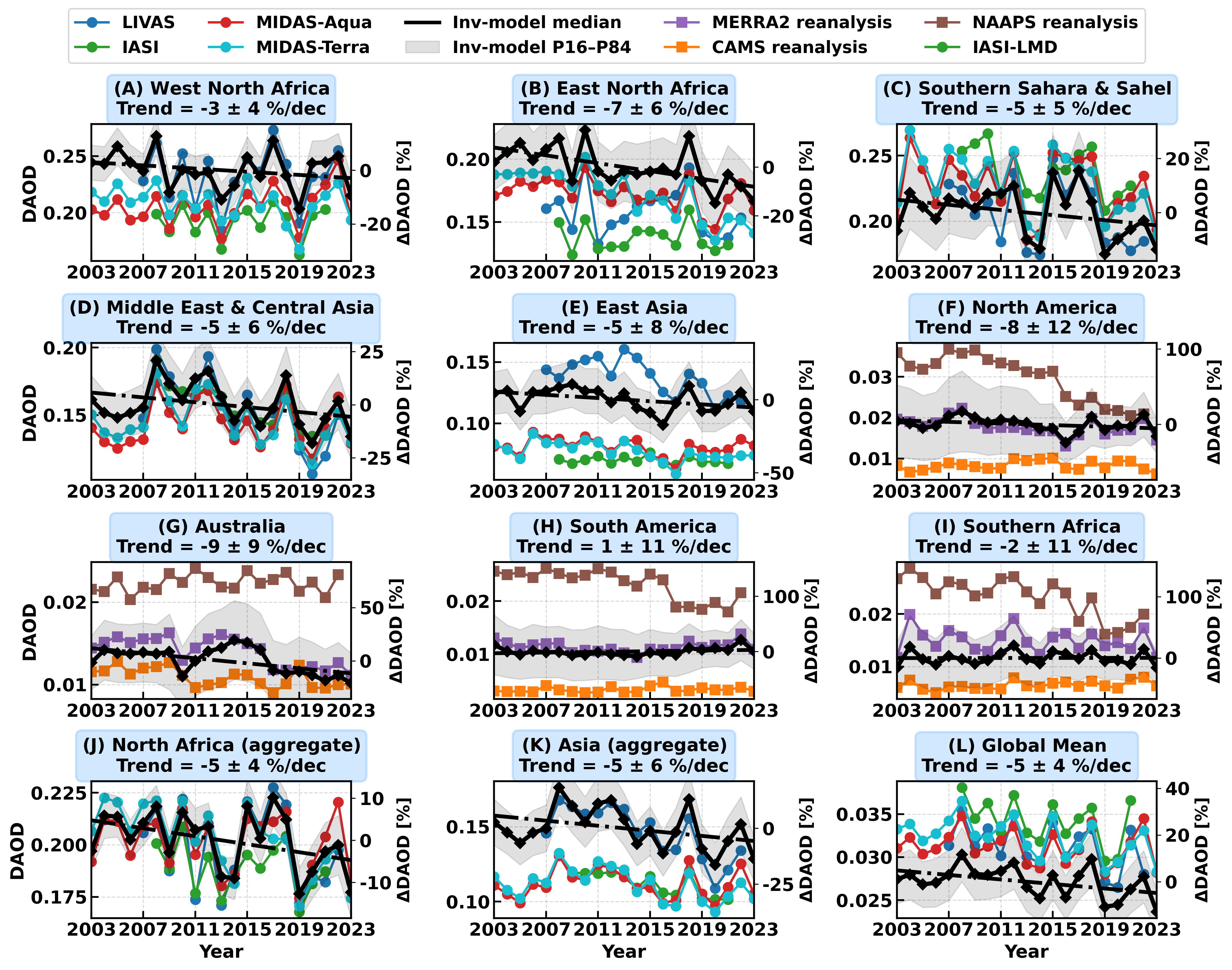
Year-to-year changes in dust aerosol optical depth (DAOD), a measure of atmospheric dustiness, from 2003 to 2023 across major dust-source regions and globally. Global DAOD declined by −10 ± 8 %, with decreases across much of the Northern Hemisphere; shaded ranges show estimate uncertainty.
Strongest evidence yet of a global dust decline.

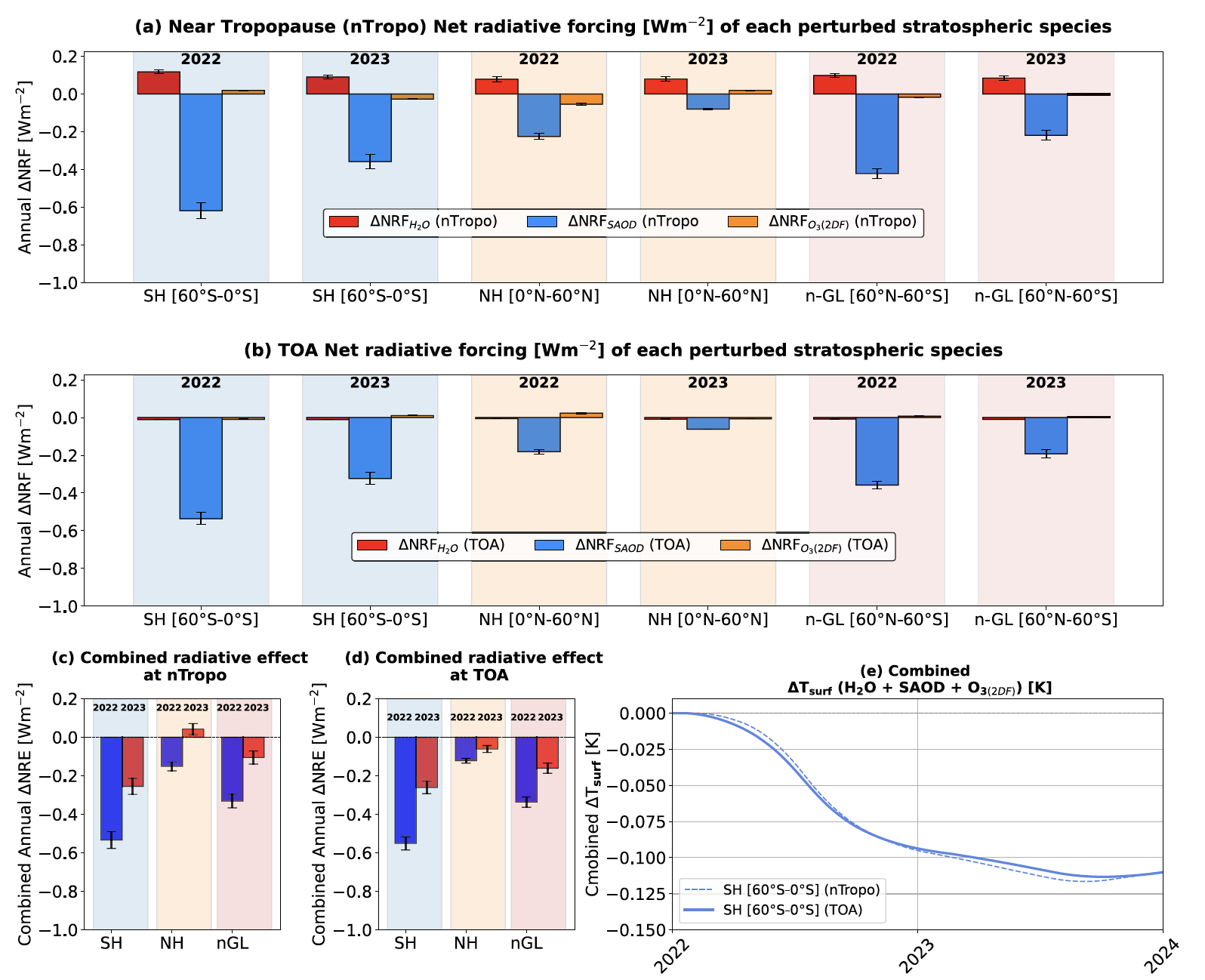
Net cooling of −0.55 W m⁻² from sulfate aerosols drove a −0.10 K SH temperature anomaly — contradicting warming projections.
Measurable volcanic cooling challenges climate projections.

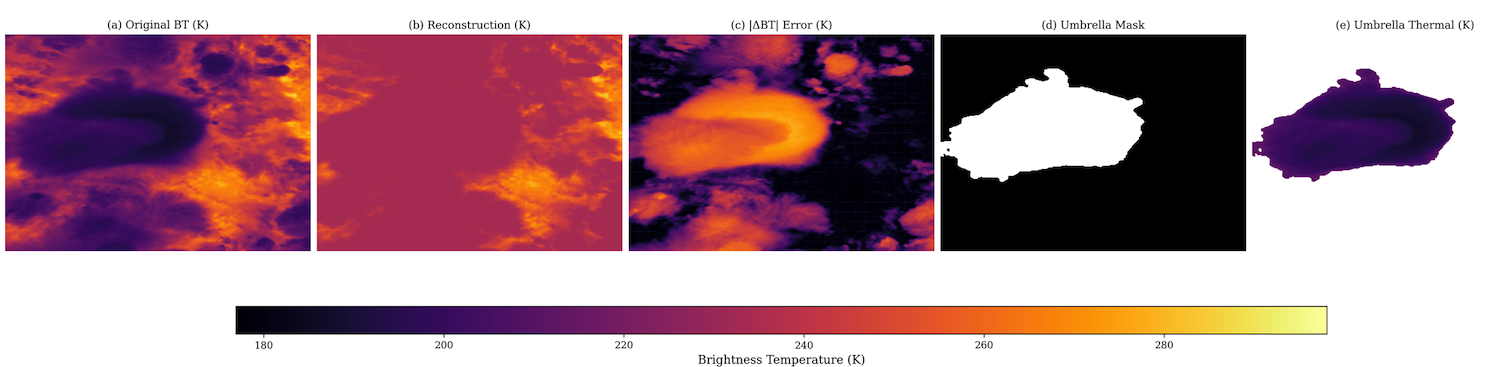
Deep-learning tracking of volcanic umbrella-cloud properties from geostationary satellite imagery, demonstrated on the 2022 Hunga and 2024 Ruang eruptions.
Toward rapid, automated ash-hazard monitoring.

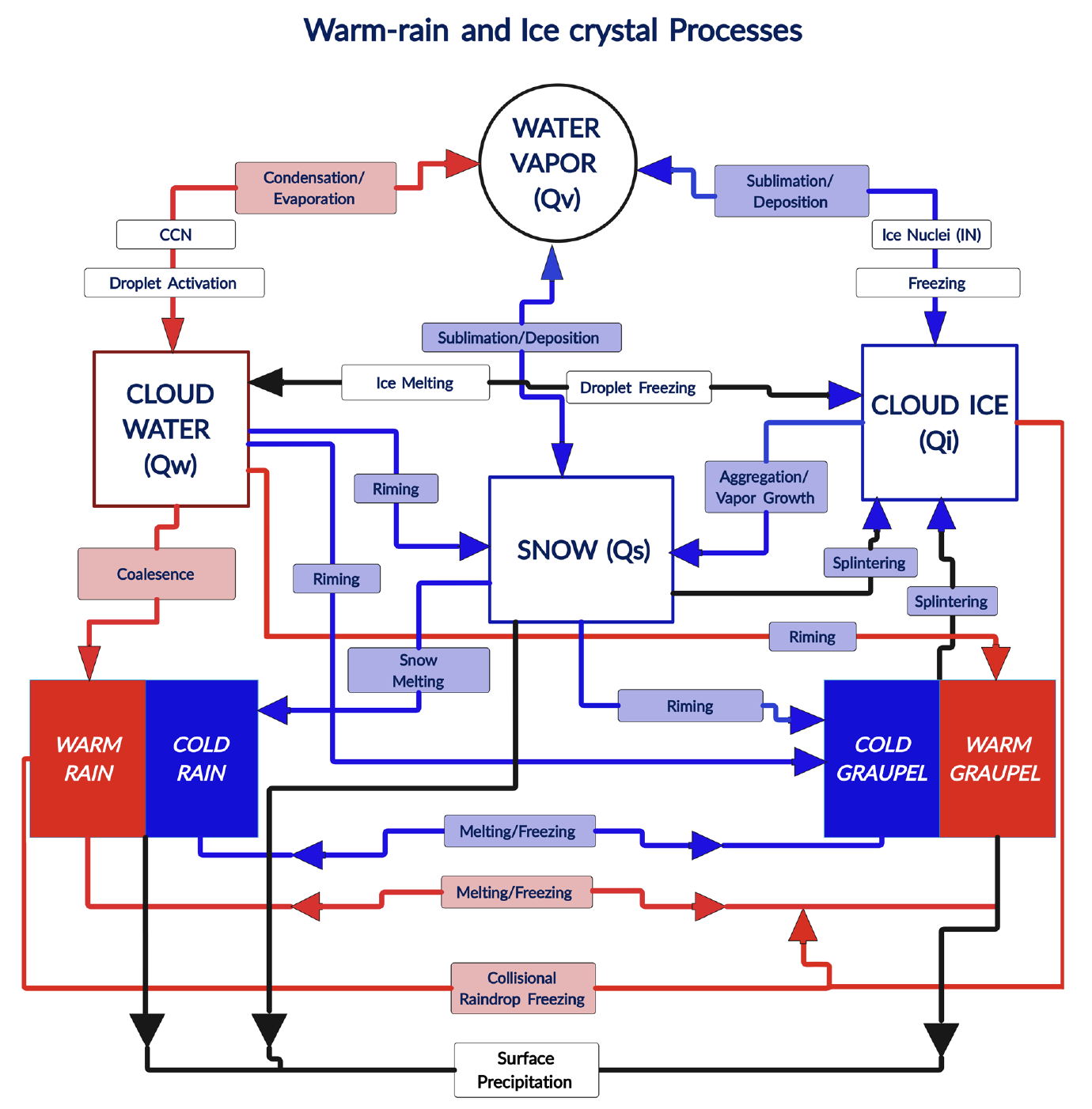
Warm-rain processes account for ~80% of surface precipitation in very warm-based clouds.
Cloud-base warming shifts precipitation to warm-rain.

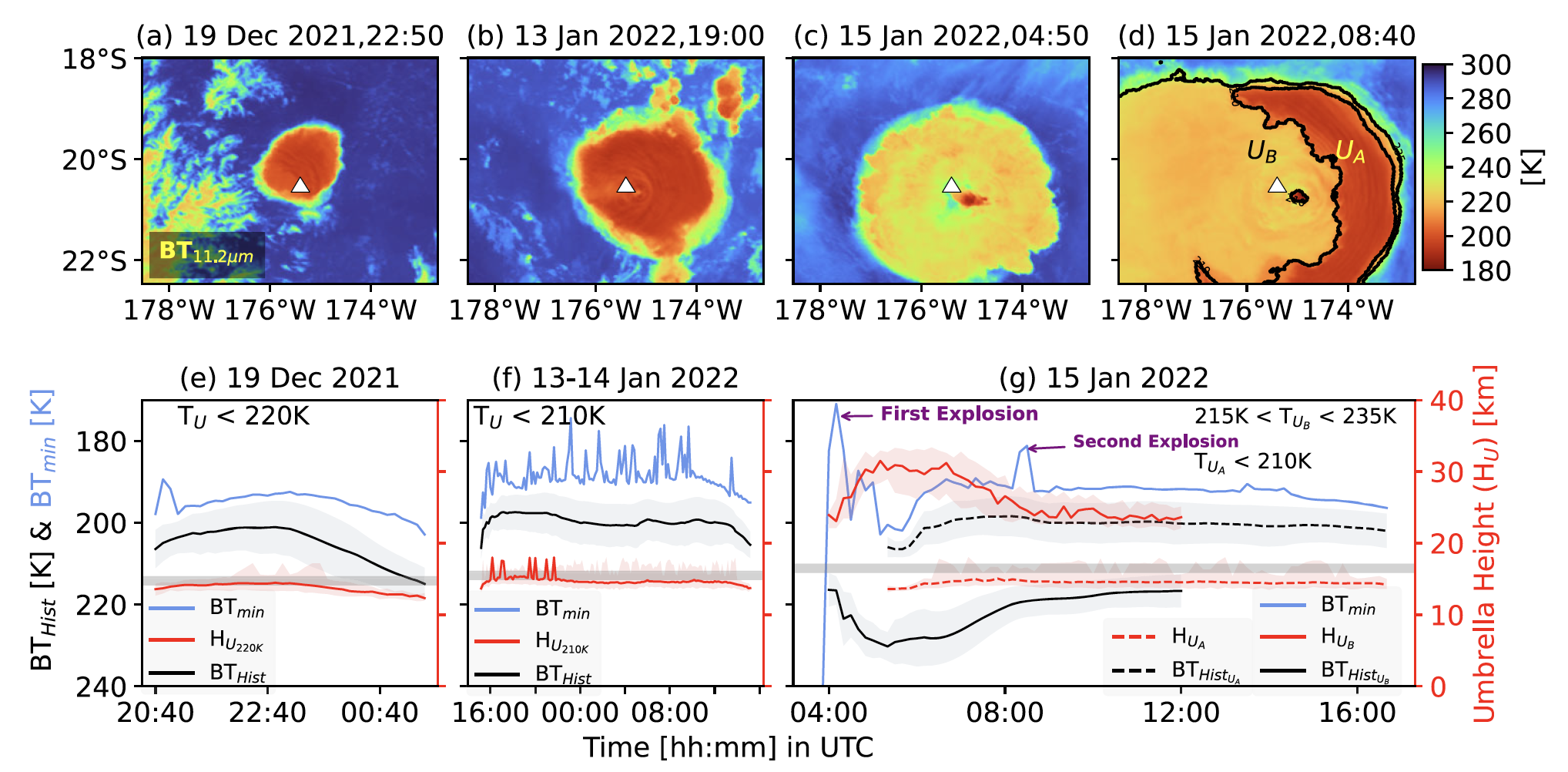
Unprecedented umbrella heights (~31 km), two ice-rich layers, volumetric flow of ~5.0 × 10¹¹ m³ s⁻¹.
Record-high volcanic clouds redefine eruption science.

Year-to-year changes in dust aerosol optical depth (DAOD), a measure of atmospheric dustiness, from 2003 to 2023 across major dust-source regions and globally. Global DAOD declined by −10 ± 8 %, with decreases across much of the Northern Hemisphere; shaded ranges show estimate uncertainty.
Strongest evidence yet of a global dust decline.

Net cooling of −0.55 W m⁻² from sulfate aerosols drove a −0.10 K SH temperature anomaly — contradicting warming projections.
Measurable volcanic cooling challenges climate projections.

Deep-learning tracking of volcanic umbrella-cloud properties from geostationary satellite imagery, demonstrated on the 2022 Hunga and 2024 Ruang eruptions.
Toward rapid, automated ash-hazard monitoring.

Warm-rain processes account for ~80% of surface precipitation in very warm-based clouds.
Cloud-base warming shifts precipitation to warm-rain.

Unprecedented umbrella heights (~31 km), two ice-rich layers, volumetric flow of ~5.0 × 10¹¹ m³ s⁻¹.
Record-high volcanic clouds redefine eruption science.