Ashok Kumar Gupta, Ph.D.

Staff Scientist
Department of Earth & Environmental Sciences, Vanderbilt University

I study how aerosols, clouds, and radiation interact to shape weather and climate, from tropical convection and cirrus to polar mixed-phase clouds. My approach combines NASA satellite and airborne observations with climate model output, radiative-transfer and cloud-resolving simulations, and machine learning, guided by a recurring question: what does the vertical and size-resolved structure of aerosols and clouds reveal that column-integrated quantities cannot? Current themes include mineral dust, from its evolving global cycle to its role in cloud microphysics — the warm-rain and ice-crystal processes that govern precipitation; the radiative structure of tropical cirrus and polar clouds; the atmospheric and climate impacts of volcanic eruptions; and physics-informed deep learning for satellite retrievals, observation-consistent datasets, and model parameterizations.

Ashok Kumar Gupta, Ph.D.

Research Areas


Featured Publications

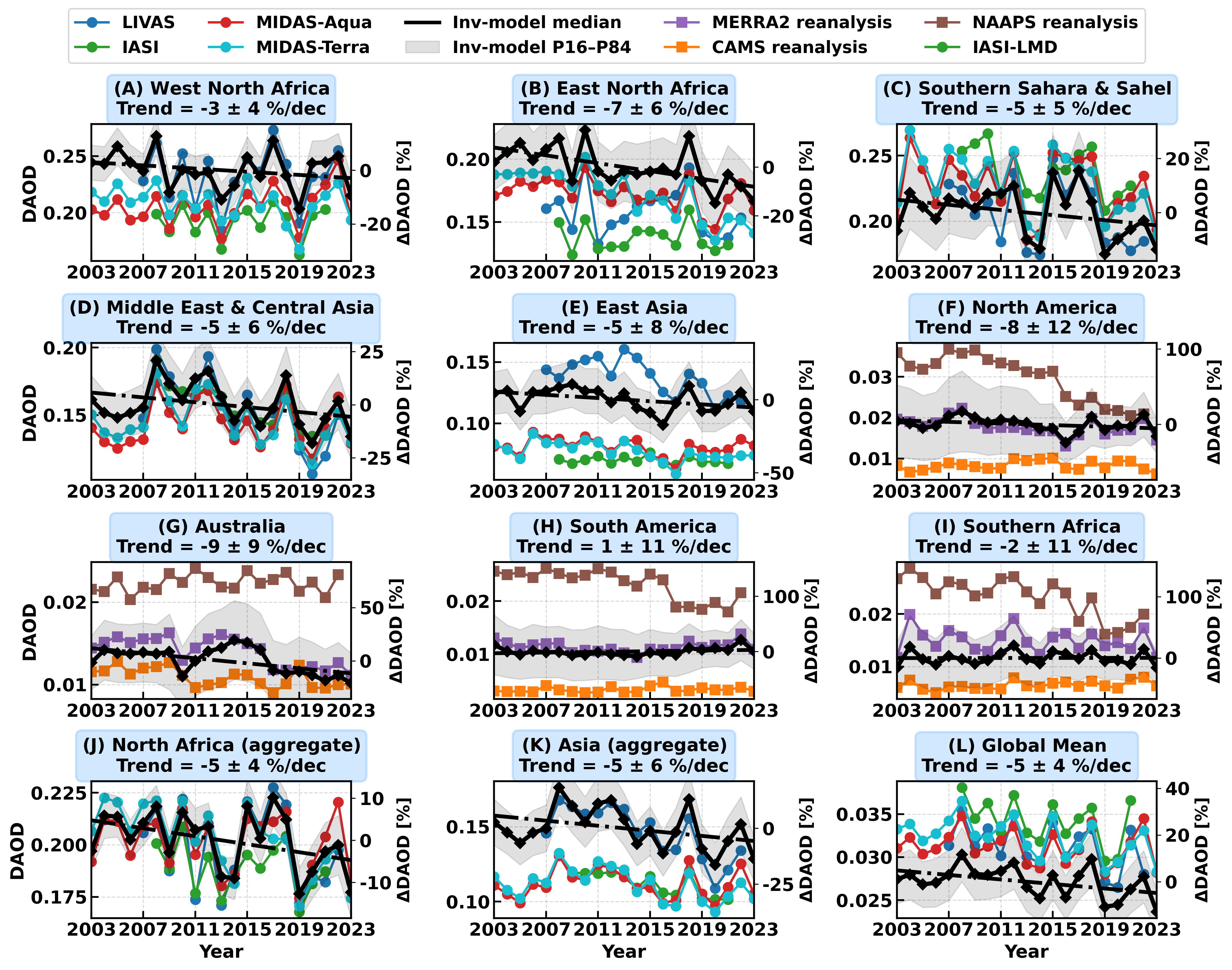
Annual dust aerosol optical depth, 2003–2023, by region and globally

Earth has become less dusty in the 21st century

Gupta et al., 2026 · Science Advances

Year-to-year changes in dust aerosol optical depth (DAOD), a measure of atmospheric dustiness, from 2003 to 2023 across major dust-source regions and globally. Global DAOD declined by −10 ± 8 %, with decreases across much of the Northern Hemisphere; shaded ranges show estimate uncertainty.

Strongest evidence yet of a global dust decline.

Hunga cooling

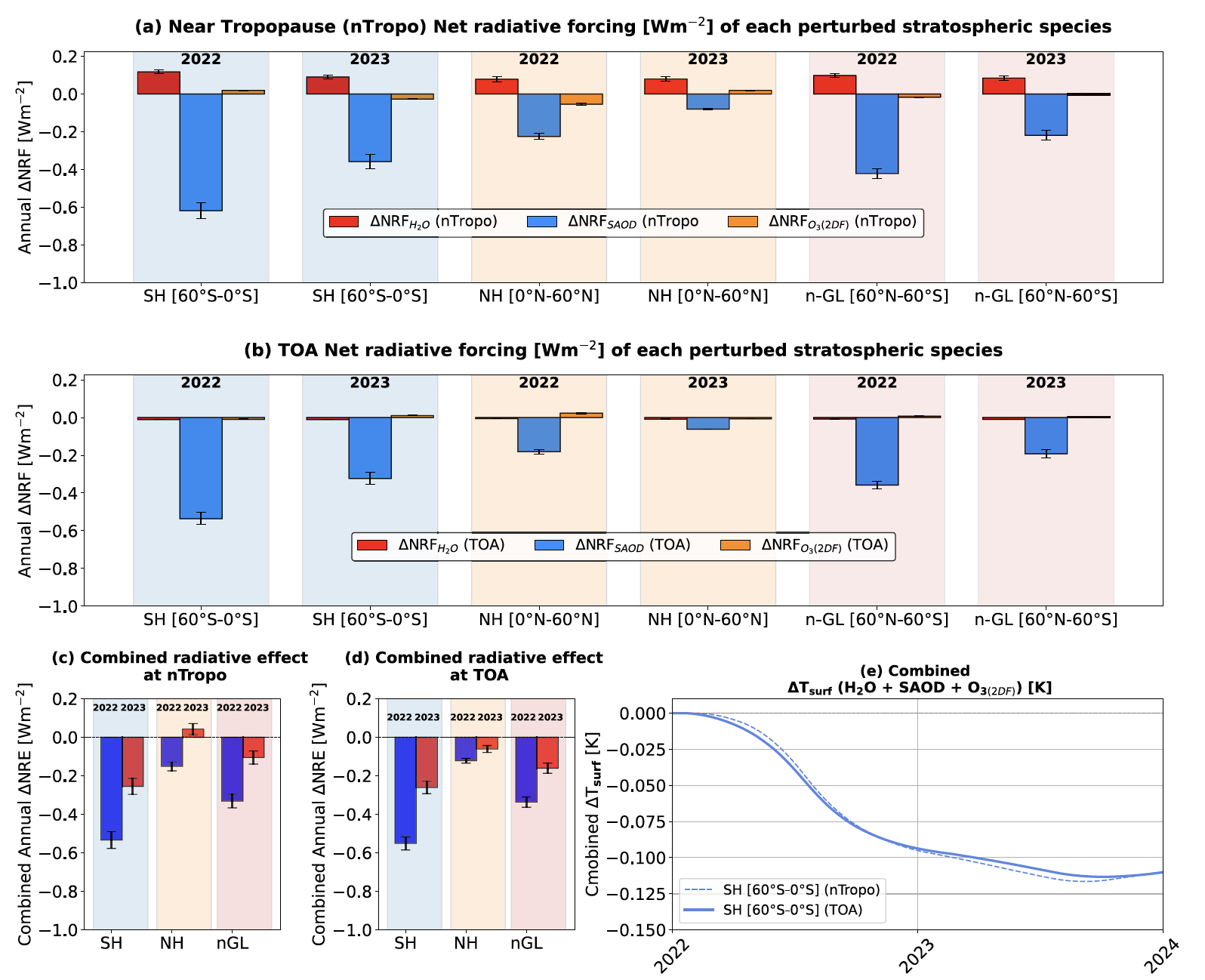
Hunga eruption cooled the Southern Hemisphere

Gupta et al., 2025 · Comms Earth & Env

Net cooling of −0.55 W m⁻² from sulfate aerosols drove a −0.10 K SH temperature anomaly — contradicting warming projections.

Measurable volcanic cooling challenges climate projections.

ConvLSTM

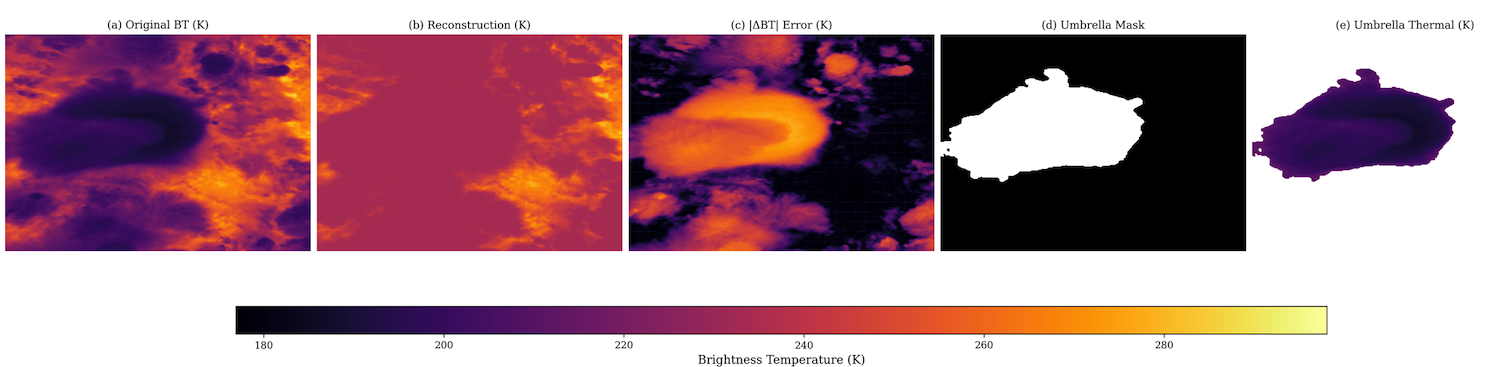
ML-based volcanic umbrella cloud detection

Gupta & Bennartz · Manuscript ready

Deep-learning tracking of volcanic umbrella-cloud properties from geostationary satellite imagery, demonstrated on the 2022 Hunga and 2024 Ruang eruptions.

Toward rapid, automated ash-hazard monitoring.

Warm vs cold rain

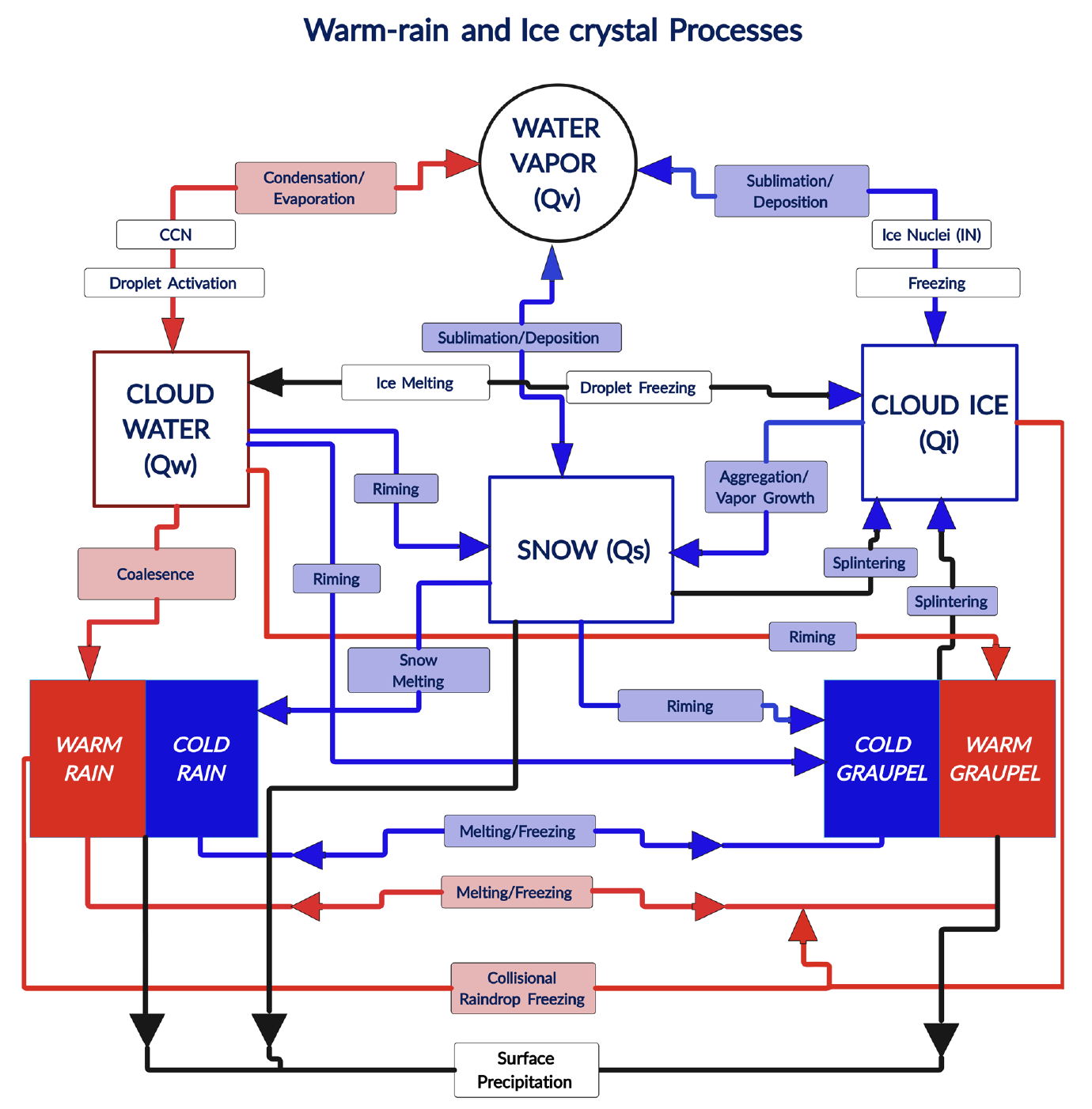
Warm vs. cold rain in continental storms

Gupta et al., 2023 · Comms Earth & Env

Warm-rain processes account for ~80% of surface precipitation in very warm-based clouds.

Cloud-base warming shifts precipitation to warm-rain.

Hunga chronology

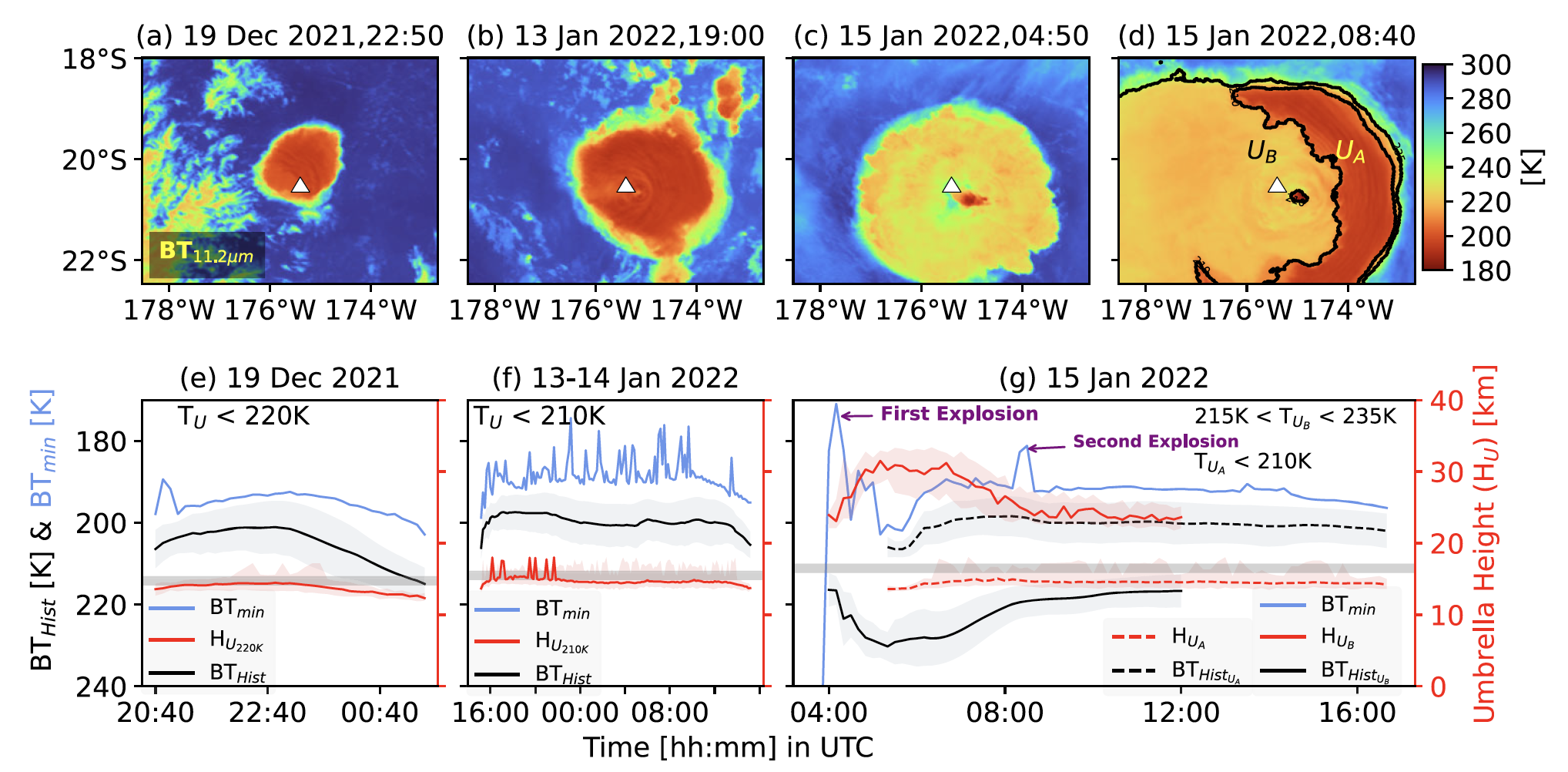
Volcanic umbrella clouds: Hunga Tonga

Gupta et al., 2022 · Comms Earth & Env

Unprecedented umbrella heights (~31 km), two ice-rich layers, volumetric flow of ~5.0 × 10¹¹ m³ s⁻¹.

Record-high volcanic clouds redefine eruption science.

Annual dust aerosol optical depth, 2003–2023, by region and globally

Earth has become less dusty in the 21st century

Gupta et al., 2026 · Science Advances

Year-to-year changes in dust aerosol optical depth (DAOD), a measure of atmospheric dustiness, from 2003 to 2023 across major dust-source regions and globally. Global DAOD declined by −10 ± 8 %, with decreases across much of the Northern Hemisphere; shaded ranges show estimate uncertainty.

Strongest evidence yet of a global dust decline.

Hunga cooling

Hunga eruption cooled the Southern Hemisphere

Gupta et al., 2025 · Comms Earth & Env

Net cooling of −0.55 W m⁻² from sulfate aerosols drove a −0.10 K SH temperature anomaly — contradicting warming projections.

Measurable volcanic cooling challenges climate projections.

ConvLSTM

ML-based volcanic umbrella cloud detection

Gupta & Bennartz · Manuscript ready

Deep-learning tracking of volcanic umbrella-cloud properties from geostationary satellite imagery, demonstrated on the 2022 Hunga and 2024 Ruang eruptions.

Toward rapid, automated ash-hazard monitoring.

Warm vs cold rain

Warm vs. cold rain in continental storms

Gupta et al., 2023 · Comms Earth & Env

Warm-rain processes account for ~80% of surface precipitation in very warm-based clouds.

Cloud-base warming shifts precipitation to warm-rain.

Hunga chronology

Volcanic umbrella clouds: Hunga Tonga

Gupta et al., 2022 · Comms Earth & Env

Unprecedented umbrella heights (~31 km), two ice-rich layers, volumetric flow of ~5.0 × 10¹¹ m³ s⁻¹.

Record-high volcanic clouds redefine eruption science.

View all 13 publications →